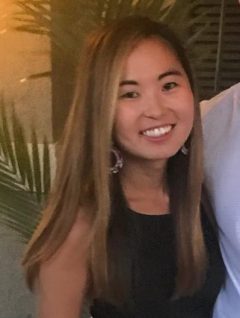
I decided I wanted to blog about this topic years ago. I’ve written and re-written drafts upon drafts, none of which have quite been able to fully encompass how important and intensely personal this topic is to me – and how badly I want to do it the respect it deserves.
I wanted to publish when, in law school, an Asian-American judge came to lecture and I got to truly imagine myself in the career path I had chosen. I wanted to publish when I once returned from a trip to Toronto, where I was in deep, life-changing awe of not only the sheer number of biracial couples around me, but the complete normalcy with which they were able to go about their lives. I wanted to publish when Crazy Rich Asians came out and I cried through the whole showing, finally getting to see myself and my family represented in the fully Asian cast of a major movie production. I wanted to publish when Jeremy Lin became the first Asian-American to win a NBA Championship and when Bong Joon Ho won award after award at the 2020 Oscars, both of whom opened up another yet another round of conversations about Asians and how far we’ve come.
And I wanted to publish at the start of the COVID-19 era, and the realization of how far we still have yet to go.
***
It’s hard to explain my complex and uneven relationship with my ethnicity. I have recognized, especially as I age, that being Asian is so intrinsically part of my being that even the times when I worked so hard to deny, ignore, and distance myself from it are part of my identity, and should be acknowledged and included in my history.
Growing up in mainly White, middle America was, and remains to this day, a good childhood. Both my parents worked good jobs and worked hard, and provided for my brother and I in ways that I recognize now were far beyond those of our peers. They spoke English well even before I was born, and the hardships that other Asian-Americans face – translating English to Vietnamese or cultural boundaries – were practically non-existent for me. They gave me an American name, preventing prejudice at first glance. They let me speak English at home and exclusively, which let my speech flourish without any hint at an accent. They studied and observed and worked tirelessly to make sure that even though my high school was different from theirs, they would understand it and help us succeed in it.
If the biggest troubles you faced as a first-generation teenager were that your parents did not allow you to take part in the senior class water-gun fight (because, they were correct, you could have been arrested) and made you wait a few years to attend dances, your problems were indeed few and far between. I was incredibly lucky.
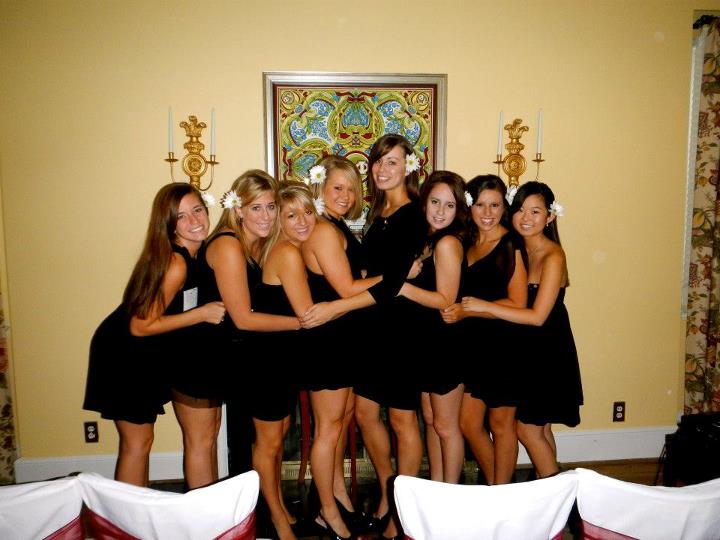
Of course, when you are a teenager, discipline and dictatorship look somewhat the same, so I fought back, desperately wishing to be as “free” as my Caucasian peers, with less pressure to succeed and more grace, in my mind, to fail and still be loved. (I was, of course, unbelievably incorrect and wildly off-base – an Asian parents’ love is not reflected in whether or not you succeed; an Asian parents’ love is reflected in their overwhelmingly strong belief that with hard work and effort, you will always be able to succeed.) As I went from high school and into college, I often made subtle and sometimes obvious attempts to separate myself from my minority status. I went to great lengths to participate in American activities, and to shun Asian ones. I wore what everyone else wore, followed trends and brands that everyone else followed. I joined a sorority. I maintained almost exclusively Caucasian friendships and relationships. I joked so frequently about being bad at math that I actually talked myself into being bad at math – and to tell you the truth, I can do math just fine.
I found myself addressing my Asian-ness head-on in social settings, often cracking jokes about myself at my own expense, attempting to ease what I felt was the obvious elephant in the room: that I was, more often than not, the only minority among people with very little minority experience, and if not that, at the very least the only Asian. I allowed people around me to make racially insensitive jokes, and I shied away from, rather than confronted, obviously problematic Asian commentary. I worked so hard – insanely hard – to make people feel comfortable around me, instead of feeling comfortable with myself.
For a long time, I was fighting a losing battle. You see, no matter how much Vineyard Vines you wear, or how many “Hi, I’m Asian but not the type of Asian who can do your math homework for you” jokes you make, you never quite fit in. No one ever confuses you for your blonde friend or your brunette friend. There’s always still a few lingering degrees of separation. Your eyes betray you. Your hair betrays you. The first thing anyone sees about you will always be that you are Asian. You are always different, no matter how the same you try to be.
But if you’re really lucky, one day you will wake up and you will realize that being the same isn’t what matters. Being different is a privilege. It is a blessing.
It is an honor, just to be Asian.
***
I can remember almost every instance that an Asian-American made an impact on me as I was growing up. I remember that the Yellow Power Ranger was Asian. I remember watching a special on Kristy Yamaguchi, and reading so many biographies of her that one year I got a special figure skater snow globe as a gift from my parents. I remember Brenda Song playing the sweet but daft London Tipton on the Suite Life of Zack and Cody, and again in a brief role in The Social Network. I remember dreaming about being Lisa Ling or Lucy Liu when I grew up. I remember when Jamie Chung went on the Real World and then broke into acting. I remember when Ken Jeong jumped out of the back of that car in the middle of the desert, fully nude, in The Hangover.
I remember thinking that if a guy like Harry Potter could like a girl like Cho Chang, then maybe guys could like me too.
The fact that each instance is so memorable to me is both a praise and indictment of Asian representation. It tells us exactly how few and far between those moments were. It reminds us that each interaction is important, and makes a far greater impact on who we are and who we will grow up to be than we could have ever imagined. And it humbles us in its simplicity.
We. Deserve. To. Be. Seen.
Would I have tried to be more myself, and less like everyone else, if instead of just one Asian on each of those television shows, there were more? Would I have been prouder to admit who I am if I thought life would be easier for me to declare so? Instead of the immense amount of gratitude for my heritage that I now have at 28, would I have had it all along at age 8? Or 18?
We’ll never know. The best we can do now is recognize who we are, what our struggles have been, and where we go from here.
***
As the world recovers from the chaos and troubles that COVID-19 has presented, I worry about the next generation of young Asian-Americans who, like me, are just trying to fit into a world that already knows at first glance that we are different. I worry that they will make the same mistakes I did – that they will run away from, rather than to, their Asian heritage and culture. I worry that they, like I once did and sometimes still do, will take for granted not just the immeasurable things our parents do for us now but the incredible things they did for us even before we were born – coming to a new and different country just for a better life. I worry that they will face backlash. I worry that the progress we have made is not enough.
Once, in a sociology course in college, I was blindly asked by a professor to defend why Asian-Americans are so often referred to as “the model minority.” Mortified at being put on the spot when I so desperately and constantly strove to blend in, I mumbled an answer about being held to a higher standards by our parents, and the sheer fear of failure preventing most of us from seriously putting a toe out of line. But now, the answer I wish I had said was this:
There are no “model minorities.” The idea of model minorities inherently places minorities at odds with one another, alleging that some “do it better” than others. The truth is, there is no way to “be better” at being a minority in America. We are all different, and everyone knows we are different. We all face challenges. We are all treated differently, and we are all blamed for various issues. Yesterday, it was taking up too many seats at Harvard. Today, it is COVID-19.
Spending your entire life trying to be the same, as I have largely done, is a fruitless exercise that will take you further and further away from the truth – that we all, despite our differences, deserve to be here regardless of who we are and where we come from. That we all give value to a society that would die in homogeneity if not for the ability of diverse minds and people to push us past boundaries we could not reach before. That it is in our differences where we thrive, not our desire to be the same.
I hope that as we emerge into the next stage of normalcy that we have been forced into, Asians do not suffer. I hope that we do not feel unwelcome in a place so many of us truly and rightfully call home. And I hope most of all that we ourselves feel comfortable in who we are and the value we bring. Because it is an honor just to be Asian.

 Claudia's Shorts